

Rome
Two millennia of empire, art and gastronomy layered into one living city — unmissable for culture-seekers
Deals from £375ppBest Deal of Rome



Overview
Things To Do
Deals
Travel Guide
Approximately 2 hours 40 minutes by air from London Gatwick or Heathrow, Rome sits in the Lazio region of central Italy, straddling the River Tiber roughly 25km inland from the Tyrrhenian Sea. The city is globally recognised for three things above all: the density of ancient Roman archaeology — the Colosseum, Forum, Palatine Hill and Pantheon among them — the Vatican, which functions as an independent city-state within the capital and houses one of the world's great art collections, and a food culture so deeply embedded in daily life that even a neighbourhood bar serves food worth eating slowly. The climate is Mediterranean, with hot dry summers and mild, occasionally rainy winters; spring and autumn are the finest seasons for walking the city. Rome's historic centre is a UNESCO World Heritage Site. Flights from the UK operate year-round from Gatwick, Heathrow, Stansted, Manchester and Edinburgh into Fiumicino (Leonardo da Vinci) Airport, making city breaks and extended holidays equally straightforward for British travellers.
✨ Why Visit Rome
- More ancient history per square kilometre than anywhere else in Europe — within a single afternoon's walk from the Colosseum, you pass the Circus Maximus, the Palatine Hill, the Pantheon (built 125 AD, the best-preserved ancient building on earth) and the Campo de' Fiori, each separated by centuries of history yet a few minutes apart on foot.
- The Vatican is technically a separate country inside the city — St Peter's Basilica, the Sistine Chapel and the Vatican Museums are contained within a 44-hectare sovereign state; entry to St Peter's Square and the Basilica is free, while the Museums rank among the most visited in the world with over 6 million annual visitors.
- Food that is genuinely specific to Rome — cacio e pepe, carbonara, coda alla vaccinara and supplì are Roman dishes, not generically Italian; the city's food identity is as distinct from Naples or Bologna as Paris is from Lyon.
- A city that is free to explore on foot — the Trevi Fountain, Piazza Navona, the Spanish Steps and the Pantheon cost nothing to visit; Rome rewards walkers with more incidental beauty — a carved doorway, a corner fountain, a hidden courtyard — than perhaps any other European capital.
- World-class contemporary art alongside the ancient — the MAXXI (National Museum of 21st Century Arts), designed by Zaha Hadid and opened in 2010, and the Palazzo delle Esposizioni represent a creative scene that sits alongside the ancient without apology.
- Manageable year-round city-break destination from the UK — at under 3 hours' flying time and with competitive fares from multiple UK airports, Rome works as a long weekend as readily as a week-long holiday.
🌴 What Makes It Special
Unlike Florence or Venice, Rome is a fully functioning capital city — it has a Metro, suburbs, government ministries, traffic and 2.8 million residents going about their daily lives entirely indifferent to the tourism around them. That gives it an energy and authenticity that purely tourist-historic cities cannot replicate. Unlike Athens or Istanbul, Rome's ancient monuments are embedded within a modern urban fabric rather than fenced off; you can eat a plate of pasta in a restaurant whose foundations are 1st-century AD. Unlike Paris, the food culture here is neighbourhood-specific rather than formally gastronomic — the best meal you'll eat is often in a 12-table trattoria with a handwritten menu rather than a Michelin-listed address.
📍 Key Areas to Explore
- Centro Storico — the dense medieval and baroque core between the Pantheon and Piazza Navona, where most of Rome's iconic monuments and best restaurants are concentrated.
- Trastevere — a medieval neighbourhood west of the Tiber known for its cobbled lanes, the 12th-century Santa Maria in Trastevere basilica and Rome's most atmospheric evening dining scene.
- Vatican City & Prati — the independent papal state containing St Peter's Basilica and the Vatican Museums, bordered by the upmarket Prati neighbourhood with its wide boulevards and excellent aperitivo bars.
- Testaccio — Rome's former slaughterhouse district, now the city's most food-focused neighbourhood, home to the Testaccio Market, some of the oldest trattorias in Rome and the Protestant Cemetery where Keats is buried.
- Villa Borghese & Pincio — the largest park within the historic city, containing the Borghese Gallery, a boating lake and the Pincian Hill terrace with Rome's finest panoramic view.
- Tivoli (Day Trip, 30km East) — the hilltop town east of Rome containing Hadrian's Villa (a UNESCO World Heritage Site, 2nd century AD) and the Villa d'Este, renowned for its Renaissance water gardens.
- Ostia Antica (Day Trip, 25km Southwest) — Rome's ancient harbour city, far better preserved than Pompeii in many respects yet visited by a fraction of the number; an entire Roman town with baths, taverns, mosaics and a theatre still largely intact.
Rome's appeal spans 2,000 years of history, serious food culture and a street life that rewards the unhurried.
🏞️ Nature & Outdoor Activities
- Walk the Appian Way (Via Appia Antica, Southeast Rome) — hire a bicycle from the Appia Antica Regional Park visitor centre (€3/hour) and cycle Rome's oldest road, lined with ancient tombs and umbrella pines, past the catacombs of San Callisto and San Sebastiano.
- Explore Villa Pamphilj (Monteverde, Rome) — Rome's largest public park, largely unknown to visitors, with formal gardens, lakes and wooded walks stretching across 184 hectares; a 25-minute walk from Trastevere.
- Hike the Castelli Romani hills (Frascati, Lazio, 25km) — the volcanic hills southeast of Rome, reaching 900m at Monte Cavo, accessible by train from Termini station; wine country as well as walking country, with local Frascati white produced on the slopes.
🏖️ Beaches
- Ostia Lido (Lido di Ostia, Lazio Coast, 30km) — Rome's nearest accessible beach, reached in 30 minutes on the Roma–Lido rail line from Porta San Paolo station; most popular June–September, with stabilimenti (private beach clubs, €10–20 per sunbed) alongside free public sections.
- Anzio (Lazio Coast, 60km South) — a quieter coastal town with cleaner water than Ostia, reachable by direct train from Termini in around 60 minutes; also significant as the site of the 1944 Allied landings, with a well-maintained Commonwealth War Graves cemetery.
- Sperlonga (Lazio Coast, 120km South) — a whitewashed clifftop village above a long arc of fine white sand, considered the finest beach within realistic day-trip range of Rome; take the train to Fondi-Sperlonga station and a taxi the final 7km.
🍽️ Food & Drink
- Order Cacio e Pepe (KAH-choh eh PEH-peh) — Rome's most iconic pasta dish: tonnarelli or spaghetti tossed with Pecorino Romano, Parmigiano and freshly cracked black pepper; no cream, no butter, no shortcuts. Order it at Roscioli (Via dei Giubbonari, Centro Storico), where a plate costs around €16–18.
- Try a Supplì — a deep-fried rice croquette filled with ragù and molten mozzarella, sold from street counters and market stalls for €2–3; the correct Roman snack before pizza rather than alongside it.
- Drink Aperol Spritz or — more authentically Roman — a Negroni Sbagliato at aperitivo hour (18:00–20:00), when most bars serve free bar snacks alongside drinks; Freni e Frizioni in Trastevere is one of the best-known aperitivo venues.
- Visit Mercato di Testaccio (Testaccio, Rome) — an indoor covered market open Tuesday to Sunday selling Roman cheese, cured meats, fresh pasta, fried artichokes and the city's best cornetti from Forno Roscioli's market stall.
- For a formal dinner, La Pergola at the Rome Cavalieri hotel holds three Michelin stars — the only three-star restaurant in Rome — with panoramic views across the city from Monte Mario; expect €250–300pp for a tasting menu.
🎉 Nightlife & Entertainment
- Testaccio club district (Testaccio, Rome) — the neighbourhood's former slaughterhouse complex (the Mattatoio) and surrounding streets host Rome's most established club scene; Rashomon and Circolo Illuminati are among the long-running venues.
- Aperitivo on the Lungotevere (Prati/Trastevere, Rome) — the riverside streets on both banks of the Tiber become Rome's most atmospheric outdoor drinking area on warm evenings; bars set up tables along the embankment from May to October.
- Teatro dell'Opera di Roma (Repubblica, Rome) — Rome's principal opera house, open October to June, with tickets from €25 for upper-tier seats; outdoor summer performances are held at the Baths of Caracalla (June–August), one of Europe's most extraordinary performance settings.
- Campo de' Fiori (Centro Storico, Rome) — the square that functions as a daytime market becomes a busy outdoor bar area after 21:00; unpretentious, mixed-age, and one of the most reliably lively spots in the centre.
📸 Instagram-Worthy Spots
- The Mouth of Truth, Santa Maria in Cosmedin (Aventine Hill, Rome) — the 1st-century marble mask set into the portico of the church, made famous by Roman Holiday (1953); queue early morning to photograph it without the tourist scrum.
- The Knights of Malta Keyhole (Aventine Hill, Rome) — a precisely framed view of St Peter's dome through a keyhole in a garden gate on Piazza dei Cavalieri di Malta; one of Rome's most remarkable optical alignments and almost entirely unmarked.
- Ponte Sant'Angelo at Night (Centro Storico, Rome) — the 2nd-century bridge across the Tiber, lined with Bernini's ten angel sculptures, reflects in the river below when illuminated after dark; best photographed from the opposite bank.
- The Protestant Cemetery (Testaccio, Rome) — a walled garden cemetery of unusual peace and beauty in the middle of the city, where Keats's grave sits beneath a pyramid-shaped Roman tomb; the combination of ivy-covered headstones, cats and ancient masonry is singular.
Best Value Deals
🌟 All-Inclusive Holidays
All-inclusive holidays to Rome are less common than in beach destinations — the city's independent restaurant culture makes room-only or bed-and-breakfast far better value for most travellers. Some four-star airport-adjacent properties offer all-inclusive packages from around £399pp including flights for a 3-night stay, but the city centre's boutique hotels are almost universally bed-and-breakfast or room-only. For true all-inclusive value, combine Rome with a coastal extension to the Amalfi Coast or Sicily.
👨👩👧👦 Family Holidays
Rome rewards curious children more than most European cities, provided you manage the walking distances. The Colosseum and Forum are genuinely dramatic for older children (8+), the Vatican Museums have a dedicated children's audio guide, and Explora — Rome's dedicated children's science museum in Prati — is excellent for ages 3–10. Base families in the Prati neighbourhood for its wide pavements, proximity to the Vatican and good-value gelaterie. Families benefit most from 5–7 night stays rather than long weekends given the number of sites.
💎 Luxury Holidays
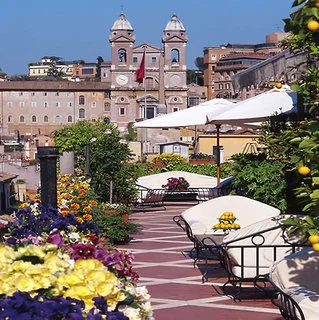
Rome's finest hotels cluster around the Spanish Steps and Via Veneto. The Hotel de Russie (a Rocco Forte property with a terraced garden in Prati, five-star) and the Palazzo Manfredi (a boutique property directly overlooking the Colosseum) represent the city's upper tier. For an exceptional experience on the ancient Appian Way itself, the Relais Villa dei Cedri offers suites within a restored 18th-century villa surrounded by Roman ruins. Expect to pay from £500–£900 per room per night at the five-star level.
⏰ Last-Minute Deals
Rome is one of Europe's most consistently popular city-break destinations, which means genuine last-minute discounts are less frequent than for beach resorts. That said, November through early December and January–February (outside the Christmas market period) offer the quietest periods, with hotel rates dropping 25–40% against July and August peaks. Easter week — when Rome hosts vast Vatican ceremonies — sells out months in advance and should never be left to chance.
Why Book with us:
💰 Low deposits from £49pp
📅 Flexible payment plans with balance due 6 weeks before travel
🛡️ ATOL Protected — your money and flights are fully safeguarded
✏️ Free amendment window on selected packages
📞 UK-based customer support, 8am–11pm every day
📅 Best Time to Visit Rome
Spring (April–May) and autumn (September–October) are the finest seasons. April and May bring temperatures of 18–22°C, manageable crowds and the city at its most photogenic — the flower stalls on the Campo de' Fiori, wisteria on the villa walls, evening light across the Forum. September and October offer similar temperatures after the August heat breaks, with the advantage that the summer tourist peak has subsided. Summer (June–August) is hot — July and August regularly reach 32–35°C — and extremely crowded; the Vatican queues in July can stretch to 3 hours without pre-booking. Winter (November–February) sees temperatures of 7–12°C, occasional rain, and dramatically reduced crowds at most sites; the Borghese Gallery and Vatican Museums are far more pleasant in January than in August. Christmas in Rome is genuinely atmospheric — the city's nativity scenes (presepi) are taken seriously — but hotel rates spike sharply in the two weeks around Christmas and New Year.
🏨 Where to Stay
- Families: Prati (near Vatican, wide streets, good transport), Trastevere for character
- Couples: Trastevere, Centro Storico near Campo de' Fiori
- Luxury seekers: Spanish Steps area (Hotel de Russie), Palazzo Manfredi near Colosseum
- First-timers & culture: Centro Storico, within walking distance of all major monuments
- Food lovers & locals: Testaccio, Pigneto (Rome's emerging creative neighbourhood)
🚗 Getting Around
Rome's historic centre is best navigated on foot — the main monuments between the Colosseum and the Vatican are roughly 4km apart, walkable in under an hour along well-signed routes. The Metro has two main lines (A and B) intersecting at Termini station; Line A serves the Spanish Steps, Vatican and Trastevere (via bus connection), while Line B serves the Colosseum. Single tickets cost €1.50 and are valid for 100 minutes across Metro, bus and tram. Taxis from Fiumicino Airport to the city centre are a flat €50 (official rate, confirm before boarding); from Ciampino Airport the flat rate is €31. Trenitalia operates fast trains from Fiumicino Airport to Termini in 32 minutes (€14pp). Car hire is unnecessary and inadvisable within the historic centre, which has a restricted traffic zone (ZTL) with automatic cameras; hire a car only if you plan to explore Lazio, the Castelli Romani or the Amalfi Coast.
💡 Travel Tips
- Pre-book everything major — the Colosseum, Borghese Gallery, Vatican Museums and Last Supper-equivalent sites sell timed-entry slots weeks ahead; turning up without a booking in peak season means missing them entirely or joining multi-hour queues.
- Plug type: Italy uses Type F (two round pins, 220V) — the same as most of continental Europe. UK adaptors required.
- Tipping: Not obligatory in Rome. A €1–2 tip per person at the end of a restaurant meal is appreciated but never expected; the coperto (cover charge of €1–3pp on the bill) is standard and not a service charge.
- The ZTL matters — the Zona a Traffico Limitato covers almost the entire historic centre; driving into it without a permit generates an automatic fine of €80–160 sent to your home address weeks later. Check hotel access arrangements carefully if self-driving.
- Drink from the nasoni — Rome's 2,000+ street drinking fountains (small iron taps called nasoni, meaning "big noses") run cold, clean municipal water continuously. Carry a refillable bottle; it is free, safe and cold.
- Validate Metro and bus tickets — stamp your ticket in the yellow machines before boarding the Metro or bus; inspectors do check, and the fine for travelling unvalidated is €100.
Map Of Rome
Top Experiences
Walk the Roman Forum
Explore ancient ruins at opening time with fewer crowds, including temples, arches, and historic landmarks.
Visit Vatican Museums
World-famous collection including Sistine Chapel, Raphael Rooms, and Michelangelo’s ceiling; book timed entry in advance.
Sunset at Pincian Hill
Panoramic terrace overlooking Rome’s skyline, domes, and rooftops; best visited before sunset.
Evening in Trastevere
Lively district with restaurants, bars, and historic streets; ideal for authentic Roman dining and atmosphere.
Visit Borghese Gallery
Intimate museum with masterpieces by Bernini and Caravaggio; advance booking essential.
Explore Jewish Ghetto
Historic area with ancient ruins, cultural sites, and local bakeries near Largo di Torre Argentina.
Top Hotels In Rome




Travel Information
Everything You Need To Know Before You Jet Off To Rome.
Other Hotels In Rome
Browse Our Wider Selection Of Hotels
Hotel D'inghilterra Roma - Starhotels Collezione
Rome, Rome
01 Aug - 08 Aug 2026
Intercontinental Ambasciatori Palace
Rome
01 Aug - 08 Aug 2026
Palazzo Manfredi, Small Luxury Hotels Of The World
Rome, Rome
01 Aug - 08 Aug 2026
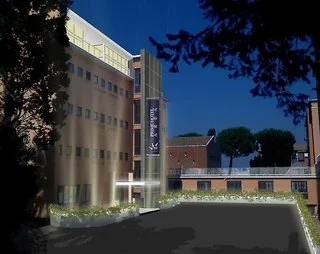
Area Roma
Rome, Rome
01 Aug - 08 Aug 2026
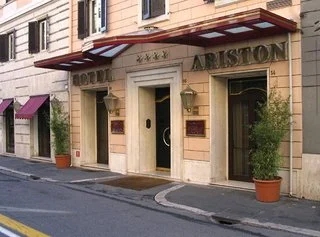
Ariston Hotel Roma
Rome, Rome
01 Aug - 08 Aug 2026
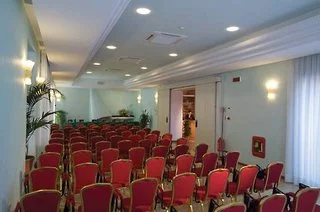
Astura Palace
Nettuno, Rome
01 Aug - 08 Aug 2026
Belstay Roma Aurelia
Rome, Rome
01 Aug - 08 Aug 2026
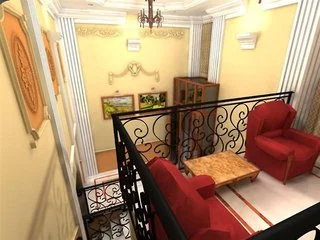
Best Roma
Rome, Rome
01 Aug - 08 Aug 2026
Best Western - Best Western Blu Hotel Roma
Rome, Rome
01 Aug - 08 Aug 2026
Augusta Lucilla Palace
Rome, Rome
01 Aug - 08 Aug 2026
Atlante Star
Rome, Rome
01 Aug - 08 Aug 2026
Ateneo Garden Palace
Rome, Rome
01 Aug - 08 Aug 2026